
 01 201 8700
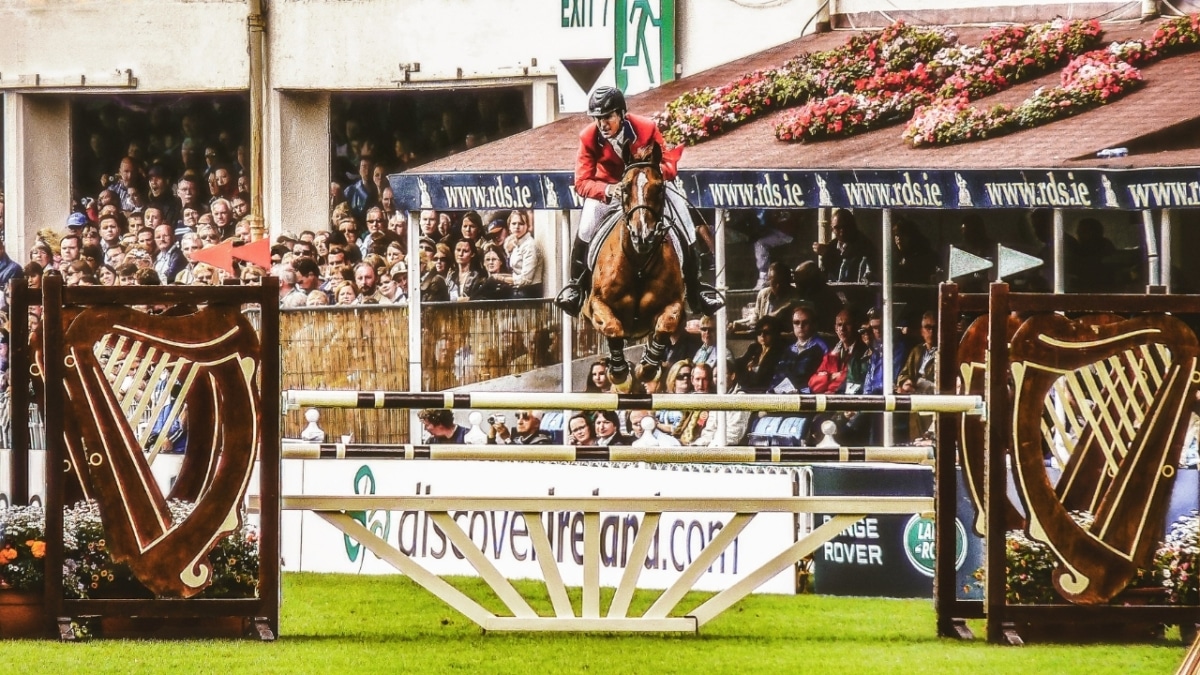
Dublin Horse Show Stand Checklist: Your Essential Guide to Exhibition Success
The next Gallagher Dublin Horse Show runs from Wednesday 4 to Sunday 8 August 2027 at the RDS in Ballsbridge, Dublin 4, and trade stand space is allocated by the RDS rather than bought through a shopping cart. If you are weighing up a stand for the first time, or you have exhibited before and want a tighter run at it, this checklist covers the ground in order: official event details, how the stand application works, what your booking does and does not include, which businesses suit the audience, build-up and breakdown rules, and the signage and printed materials worth ordering. Confirm the current position on the official show website before you commit money.
When and where is the next Dublin Horse Show?
Summary: the Gallagher Dublin Horse Show takes place from Wednesday 4 to Sunday 8 August 2027 at the RDS, Merrion Road, Ballsbridge, Dublin 4 (D04 AK83), as listed on the official Dublin Horse Show website. It runs over five days in early August every year, which makes it one of the longest trading windows of any Irish consumer show.
Visitor hours matter to exhibitors because they set the shape of your trading day. The official opening hours page gives main doors open from 09:00 to 18:00. Treat exhibitor access hours as a separate question. They are not the same as public hours, they are not published alongside them, and they are confirmed to stand holders through the exhibitor documentation the RDS issues after your booking is accepted. If the detailed 2027 daily timings have not appeared on the site by the time you are planning, do not assume a previous year's schedule carries over. Ask the trade stands team directly and get the access window in writing.
The show is a genuine hybrid, and that is the part first-time exhibitors tend to underestimate. It is a serious international equestrian fixture with show jumping, showing classes, pony competitions and the Nations' Cup, and at the same time it is a shopping and social day out for families, groups and visitors who have no horse at home at all. The RDS reports more than 120,000 visitors a year across the five days, according to its own show announcement. Competition draws people in, and then they spend hours walking between arenas, food areas and shops.
Use this short list to pin down the practical details before you build a plan around them:
- Venue and access: confirm which entrance your stand location uses, and where exhibitor vehicles are permitted, from the documents the RDS issues to accepted exhibitors.
- Public transport: Ballsbridge sits close to central Dublin and is well served by bus and rail, but check the show’s own visitor travel guidance for the routes and any event day arrangements.
- Parking: do not assume on-site parking for staff cars. Ask what exhibitor parking exists, how many permits come with your stand, and what the daily cost is.
- Accessibility: if your stand needs level access for deliveries or for customers, raise it at application stage rather than on the day, and check the accessibility information published for visitors.
- Programme changes: monitor the official website and the show’s news updates for arena changes, sponsor announcements and timetable adjustments, all of which affect footfall patterns around your pitch.
How do I apply for and book a Dublin Horse Show exhibitor stand?
Summary: you apply to the RDS, the RDS reviews your application and allocates space, and you pay on receipt of the contract and invoice. There is no instant online booking and no public price list, so the first step is an enquiry rather than a payment.
The route is set out on the show's shopping and trade stands section, and applications go through the official trade stand booking page or by email to the RDS trade stands team at [email protected]. Those are the only channels worth using. Third-party event listing sites and trade fair directories often carry outdated dates and lapsed contact details. Go to the source.
The process, in the order it actually happens:
- Enquire early and ask what space is available in the area you want, indoors or outdoors.
- Request the current trade stand information for the 2027 show, including sizes, rates and what each pitch includes.
- Submit your application with a clear description of your products, your brand and how the stand will look.
- Wait for the allocation decision. The RDS reviews applications and assigns space, then issues a contract.
- Pay in full on receipt of the invoice and contract, as the trade stand terms require. Diary this, because your place is not secure until it is paid.
Applying is not the same as being accepted. Organisers of a curated shopping event look at product relevance to an equestrian and lifestyle audience, the quality of your stand presentation, how much space is left, and whether you would duplicate exhibitors already committed. A strong application shows what you sell, what the stand will look like and why it fits the show. A weak one asks for a price and leaves the rest blank.
On cost, be wary of anyone quoting you a figure other than the RDS. Stand rates, deposits and stand sizes for the Dublin Horse Show are not published, and neither is a public application deadline. Ask the trade stands team for a current quotation for the pitch size and location you want, and ask them to confirm VAT treatment, the payment date and the cancellation terms in the same reply. Any number you find on a directory site or in an old blog post is guesswork.
The same applies to what is included. Get this itemised in writing before you budget, because the gap between a space-only pitch and a fully fitted stand is large:
| Item | Question to ask the RDS | Why it matters |
|---|---|---|
| Space only or shell scheme | Does the rate cover walls, fascia and a name board, or bare floor? | A space-only pitch means you supply the entire structure and graphics. |
| Power and lighting | Is a supply included, what rating, and is testing required? | Card terminals, lighting and fridges all depend on it. |
| Furniture | Are tables, chairs or counters provided or hired separately? | Hire costs and delivery slots need booking well ahead. |
| Wi-Fi and connectivity | Is exhibitor Wi-Fi available, and at what cost? | Mobile card readers can struggle in busy halls. |
| Storage and cleaning | Is there space for stock and empty packaging, and who cleans the aisles? | Five days of restocking needs somewhere to put boxes. |
| Insurance | What cover and documentation must you provide? | Required before you are allowed to build. |
| Passes | How many exhibitor passes come with the stand, and what do extras cost? | Rotas for five days usually need more than the standard allocation. |
Is my business a good fit for the Dublin Horse Show audience?
Summary: the show suits businesses selling to an equestrian audience and to a wider consumer audience who have come for a day out. The official shopping section lists more than 350 trade stands, indoors in the Hall 1 Shopping Village and the Simmonscourt Pavilion, plus outdoor shops spread across the RDS campus.
The categories that trade well cover more ground than people expect. Equestrian products, saddlery and horse care sit alongside country clothing, footwear, jewellery, art and prints, food and drink, homeware, garden and outdoor living, travel, vehicles, financial and professional services, and Irish lifestyle brands. If your product photographs well, can be bought on impulse or discussed in a two minute conversation, it has a place.
The important mental shift is this: plenty of the people walking past your stand do not own a horse. They came for the jumping, the atmosphere, the Best Dressed competition or a day out with family, and the shopping is part of that. Build your stand for both audiences. Specialist stock and technical knowledge earn the serious equestrian conversations, while an accessible price point and a clear, attractive display capture everyone else.
Run through this suitability check before you apply:
- Does your customer profile overlap with an affluent, mixed consumer and equestrian crowd, or are you purely trade to trade?
- Can you hold and replenish enough stock for five full days without running dry by Saturday?
- Do you have staff to cover a five day rota, including travel and breaks, without closing the stand?
- Does your margin support the total cost of exhibiting, not just the stand fee?
- Do you have a reliable way to capture leads from people who will not buy on the day?
- Can you create a stand that looks like a proper shop rather than a table with a box on it?
Set objectives you can measure afterwards. Direct sales over the five days is the obvious one. Qualified leads for a considered purchase, retailer and stockist conversations, a product launch to an Irish audience, demonstrations that convert later, and plain brand awareness in front of 120,000 people are all valid, but each demands a different stand layout and a different set of printed materials.
One distinction worth understanding: commercial trade exhibitors are not the same as the show's sponsors and partners. Sponsors back arenas, classes and competitions under separate commercial agreements handled by the show's partnership team. A trade stand buys you retail space in the shopping areas. If your interest is arena branding or class sponsorship rather than selling from a pitch, say so in your first email, because it is a different conversation.
When should I organise my stand, printing and event logistics?
Summary: work backwards from one fixed rule. The trade stand terms and conditions require your stand design and layout to be submitted to the RDS for approval at least one month before the show. That approval date, not the show date, is the deadline your artwork and print schedule has to hit.
The other timings in the terms are equally firm. Exhibits must be in place on the stand by 17:00 on the day before the show opens, and no goods may be brought in after 16:00 that day. Everything must be removed by 22:00 on the final day. Exhibitors are responsible for their own stand-building contractors, and the RDS Safety Advisor's recommendations apply to construction, display, dismantling and the staffing of stands.
| When | What to do |
|---|---|
| Six to nine months before | Enquire about space, request current rates, set your budget, and book accommodation while there is choice. |
| Four to six months before | Confirm your pitch and pay the invoice. Settle the stand concept, layout and what you are selling. |
| Three months before | Confirm height limits, fire-retardant material requirements and signage specifications with the RDS, then brief your designer. |
| Two months before | Sign off artwork, approve proofs and place print orders so that production, delivery and any reprints all fit comfortably. |
| One month before | Submit stand design and layout to the RDS for approval, as the terms require. Finalise insurance and risk assessment documents. |
| Two to four weeks before | Confirm build-up, access, delivery and vehicle movement times from the current exhibitor documentation. Lock the staff rota. |
| Week of the show | Check deliveries have arrived, test card payments, pack the stand kit and circulate emergency contacts. |
Order print with room to breathe. Artwork checks, a proof round, production and delivery all take time, and you want enough slack to replace anything that arrives damaged or with a typo in the phone number. A banner ordered the week before the show leaves you no second chance.
Alongside the print schedule, work through the operational checks:
- Public liability insurance in place, with the certificate to hand.
- A written risk assessment and method statement for your stand build.
- Electrical equipment tested and any required approvals confirmed with the RDS.
- Contractor details and passes arranged if a third party is building for you.
- Stock storage sorted, including where empty boxes go during the show.
- Card payment connectivity tested in the hall, with a backup if the signal is poor.
- A staffing rota that covers 09:00 to 18:00 for five days, breaks included.
- An emergency contact sheet with your own team, the organisers and your suppliers.
Two warnings that come up every year. Do not dismantle early. Packing down on Sunday afternoon because trade has quietened looks poor, annoys the organisers and irritates visitors still walking the halls. And follow the organiser's instructions on vehicle access and waste removal after the show, because the site clears to a tight schedule and unauthorised vehicles hold everyone up.
What signage and printed materials should I bring to my stand?
Summary: you need something readable from across a hall, something that explains the offer at three metres, and something the visitor takes away. Confirm height limits, fire-retardant material rules and signage specifications with the RDS before ordering anything, because those specs are not published and vary by location.
Work through the display kit first:
- Roller banners at the front corners of the stand, carrying your name and what you sell, not a paragraph of copy.
- Outdoor and hanging banners for frontage or any pitch on the RDS campus exposed to August weather.
- Rigid display boards for product information, price panels and anything that needs to survive five days of handling.
- Directional signs to pull people from a main walkway to a stand set back from it.
- Counter stands with branded graphics, giving you a serving point, a payment point and a branded surface in one.
- Printed tablecloths to turn a hired trestle into a finished display and hide the stock boxes underneath.
Then the sales materials. These do the quieter work of converting the visitor who will not buy today. Business cards, flyers, brochures, price lists, menus for food and drink stands, vouchers with an expiry date, order forms, loyalty cards, QR code cards linking to your shop, stickers and branded packaging are worth ordering as one matched set from your usual printer, which keeps colour consistent across the set.
Each item has a job, and it helps to be blunt about which:
| Job | What does it | Read from |
|---|---|---|
| Attract attention | Banners, flags, hanging signage | 10 metres or more |
| Explain the offer | Roller banners, display boards, counter graphics | 2 to 3 metres |
| Answer detail questions | Brochures, price lists, spec sheets | In hand |
| Capture leads | Order forms, QR code cards, entry slips | At the counter |
| Travel home with the visitor | Business cards, vouchers, branded bags | Days later |
Before anything goes to print, run the artwork checks. Use a high resolution logo file rather than one pulled from your website. Set type large enough to read at the distance the item is meant for. Supply brand colours as values, not as a screenshot. Include bleed, keep text inside the safe area, and remember that banner bases and counter tops hide the bottom band of a graphic. Put the same phone number, email and website on every piece. Scan every QR code from a printed proof, not from the screen, and check it lands on a working page.
Finally, plan quantities against five trading days and a crowd of more than 120,000. Estimate how many meaningful conversations each staff member can have per hour, multiply by the hours and the days, then add a contingency for the Saturday surge. Split the take-away materials into daily bundles so you can see at a glance whether Wednesday's rate will see you through to Sunday, and keep a reserve box sealed so a good early day does not leave you empty for the weekend. Reprinting mid-show is not a plan.
Frequently asked questions
Where can I find the Dublin Horse Show exhibitors list?
The official list of trading exhibitors appears on the show website's shopping and trade stands section, and in the show guide and site map published closer to the event. The 2027 list is released once stands are allocated, so it will not be complete in the months beforehand. Two cautions. Sponsors and partners are listed separately and are not the same thing as trade exhibitors. And an exhibitor directory from a previous year, whether on the show site or repeated on a third-party listing, is not a reliable guide to who will be trading in 2027.
Is exhibiting at the Dublin Horse Show worth the cost?
Work it out rather than guess. Add up the stand fee, print and display, stock, staff wages and travel, accommodation and parking, then set that against direct sales, the value of leads and repeat customers over the following year. A simple break-even: total cost divided by your average margin per sale gives the number of sales the five days must produce. If you spend 6,000 euro in total and make 40 euro margin on an average sale, you need 150 sales across five days, which is 30 a day. Decide whether your stand can realistically do that before you apply. The show's value is that both audiences are in one place, so a business selling to riders and to general consumers can hit two targets from one pitch.
What accommodation is available for Dublin Horse Show exhibitors?
Ballsbridge, Donnybrook and Sandymount put you within walking distance of the RDS, and Dublin city centre is a short bus or rail journey away. Options range from hotels and guesthouses to serviced apartments, which suit a team staying five nights with stock to store. Check whether the show has official accommodation partners or packages before booking independently, and compare cancellation terms carefully. Early August is peak season in Dublin, rates rise sharply and availability near the venue disappears months ahead, so book as soon as your stand is confirmed.
What safety and contractor documentation do exhibitors need?
The trade stand terms make exhibitors responsible for their own stand-building contractors, and the RDS Safety Advisor's recommendations apply to construction, display, dismantling and the staffing of stands. In practice that means having your insurance, risk assessment and contractor details ready well before build-up, and confirming with the RDS exactly what documentation they want and by when. Ask at the same time about height limits and fire-retardant material requirements, since those affect what you can order.
What should I do next to prepare for the show?
Summary: three actions move you from reading to booked, and they are best done in this order.
- Contact the RDS trade stands team at [email protected] or through the official booking page, confirm what space is available for 4 to 8 August 2027, and request a current quotation for the pitch you want.
- Download the current exhibitor documents, including the trade stand terms and conditions, and read the build-up, approval and breakdown timings before you plan anything else.
- Write a dated preparation checklist working backwards from the stand design approval deadline one month before the show, with your artwork sign-off and print delivery dates marked on it.
On the print side, request quotations early and send artwork as soon as your stand layout is settled. Ordering in good time gives you room for a proof round, a change of mind and a reprint if something is wrong, which is exactly the room you will not have in July. We have spent more than 20 years producing display and print for Irish exhibitors, and we can handle design through to delivery at the RDS. Contact us for a quotation with your stand size and dates, and we will tell you what production time you need.
One last thing. Verify the 2027 dates, opening hours, access arrangements and booking terms on the official Dublin Horse Show website before you pay for anything non-refundable. Details can change, and the show's own site is the only source worth trusting on the day you book.

